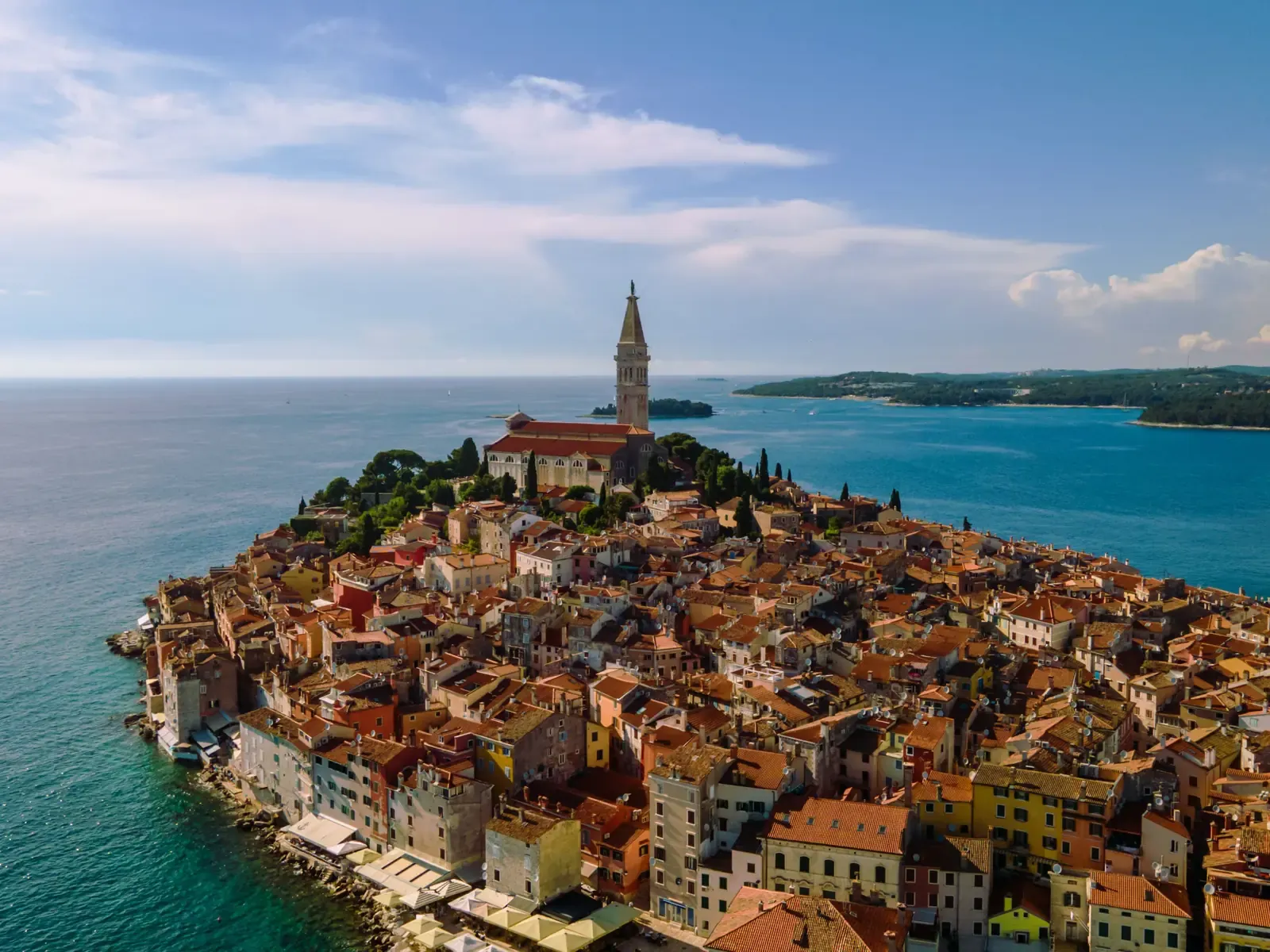
Istria is the one region in Croatia where you can eat truffles at lunch. Then you can swim off a Roman-era harbour by mid-afternoon and sleep in a walled hill town by dinner. All three sit within about an hour’s drive of each other, so none is a big detour.
That density is what makes the region confusing to plan. Pula, Rovinj and Poreč sit on the same short stretch of coast, but each pulls a different kind of traveller. This Istria, Croatia travel guide breaks down what each base is actually like and how the towns compare. It also covers how many days to give each one, so you’re not guessing once you land.
Quick answer: which town should you base yourself in?
Rovinj is the best first-time base if you want one walkable old town with easy day trips to everything else. Poreč suits families who want beach time within walking distance of the room. Meanwhile, Pula makes sense if you’re flying in or out and want the Roman Arena at your doorstep.
The hill towns, Motovun, Grožnjan and Buzet, aren’t a base at all. Instead, they’re a day trip from wherever you’re staying on the coast.
None of the three coastal towns sit more than an hour from each other by car. So basing in one and day-tripping to the rest works for a stay of any length.
How to get to Istria, Croatia
Pula Airport (PUY) is the closest airport to most of the region, about 6km from Pula’s centre. That’s roughly a 12 to 15 minute drive. But it runs a handful of direct European routes, mostly seasonal.
Rijeka Airport sits on the island of Krk, which sounds odd until you check the map. It’s about 120km and 1 hour 40 minutes by car to Rovinj. To Poreč, it’s 114km and roughly 1 hour 30 minutes. Even so, it runs more year-round connections than Pula.
When driving in from Zagreb, expect around 265km and 2.5 to 3 hours down the A1 and A8 motorways. Coming from Italy or Slovenia, Istria is the first Croatian region you hit. Trieste to Pula is a manageable day-trip distance, especially if you’re already road-tripping the northern Adriatic.
Once you’re here, renting a car is worth it unless you’re staying in one town and not moving. Buses connect Pula, Rovinj and Poreč along the coast. But Motovun, Grožnjan and Brijuni National Park are slow or impractical without one. I’d compare rental prices on Discover Cars before landing, since airport counters cost more on the day.
Pula: Istria’s Roman capital and main airport town
Pula is the biggest city in Istria, so it’s the one most people fly into. The Pula Arena is the reason it’s on any itinerary. Built in the 1st century AD, it’s a Roman amphitheatre that once held around 20,000 spectators. In fact, it’s one of the best-preserved amphitheatres in the world.
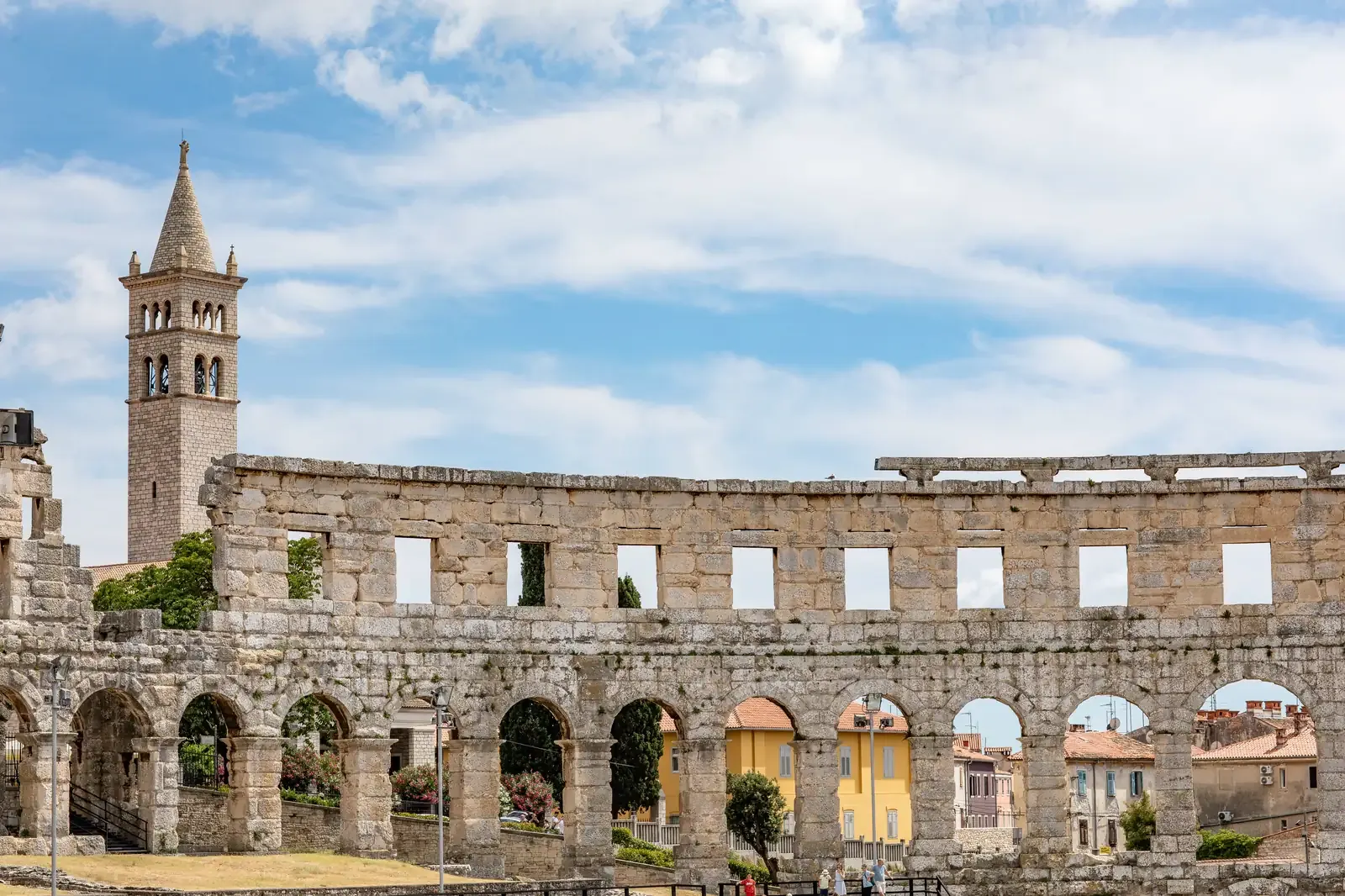
You can walk the arena floor and the underground chambers. Also, a small exhibition on ancient olive oil and wine production sits below, where gladiators once waited. Skip-the-line tickets are available on GetYourGuide, worth it in July and August when the on-site counter queue gets long.
Beyond the arena, Pula has a working port and a real city feel, rather than Rovinj’s polished old town. It also has easy access to Brijuni National Park by boat from nearby Fažana. Since it sits closest to the airport, Pula is the natural pickup point for a rental car.
I wouldn’t make Pula my only base for a longer stay. It’s useful for its arena, its airport and its ferry connections. But it’s less useful if old-town wandering is what you came for.
Rovinj: Istria’s most photogenic old town
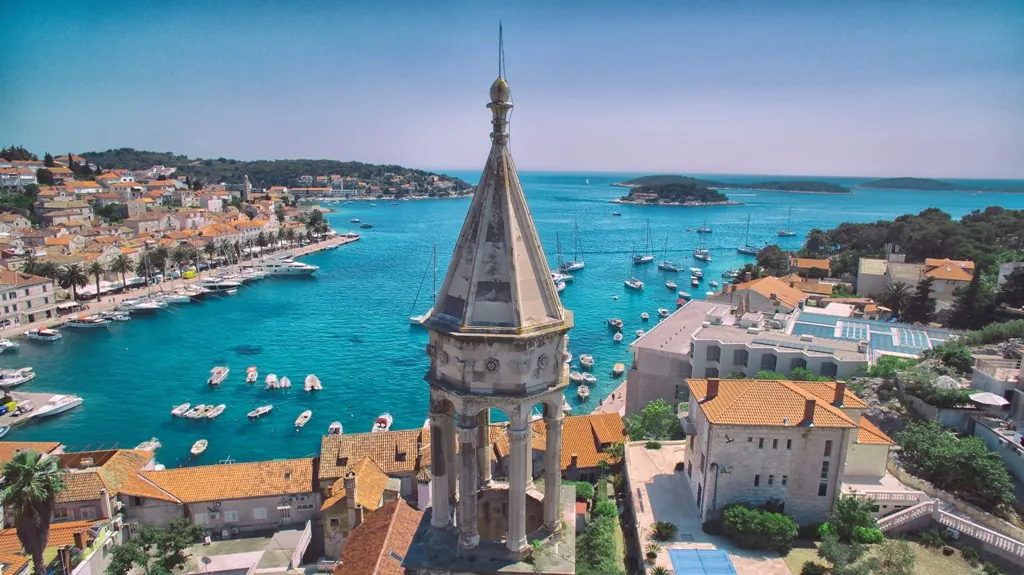
Rovinj is the town most Istria photos come from, and it earns it. The old town sits on a former island, but it’s now joined to the mainland. It’s a tangle of pastel houses on stone lanes, climbing to the Church of St. Euphemia at the top. Rovinj to Pula is about 35km, so expect roughly 40 minutes by car.
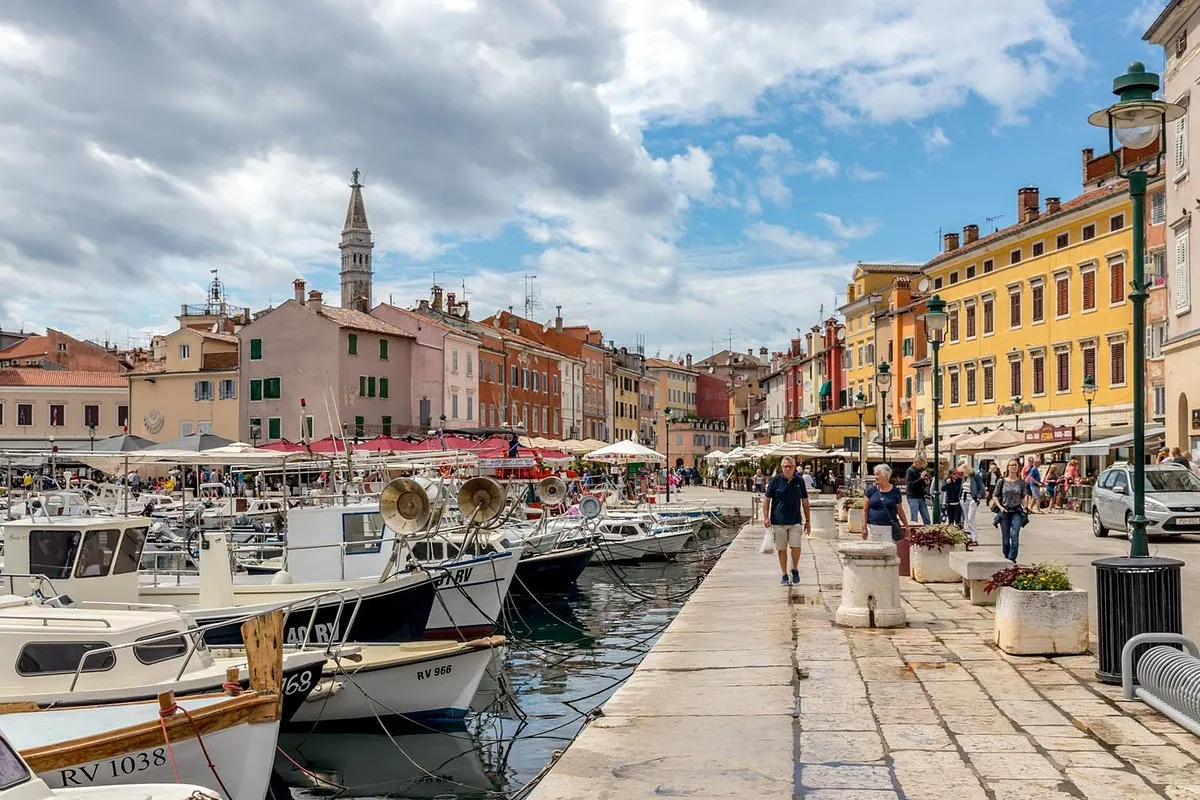
Overall, Rovinj leans upscale. Restaurant prices run higher than in Pula or Poreč. Also, the harbour fills with yachts in summer. Rooms in the old town itself book out months ahead for July and August. It’s the town I’d pick for a couple’s trip or a first Istria visit. Pick it when you want a base that feels like the region’s postcard version of itself.
A guided walking tour of the old town also covers the old Jewish quarter and Balbi’s Arch. It’s worth booking if you want the history behind the lanes, rather than just photographing them. Otherwise, the town is small enough to cover on foot in half a day. It takes longer when you stop for the bell tower view and a glass of Malvazija on the harbour.
Base here if Rovinj itself is the draw. After all, everything else in this guide, Pula, Poreč, the hill towns, sits within an hour’s drive.
Poreč: family-friendly coast and the Euphrasian Basilica
Poreč runs a different kind of trip than Rovinj. The old town sits on the original Roman street grid. Still, the real pull is the Euphrasian Basilica, a 6th-century church with gold Byzantine mosaics. It’s been a UNESCO World Heritage Site since 1997.
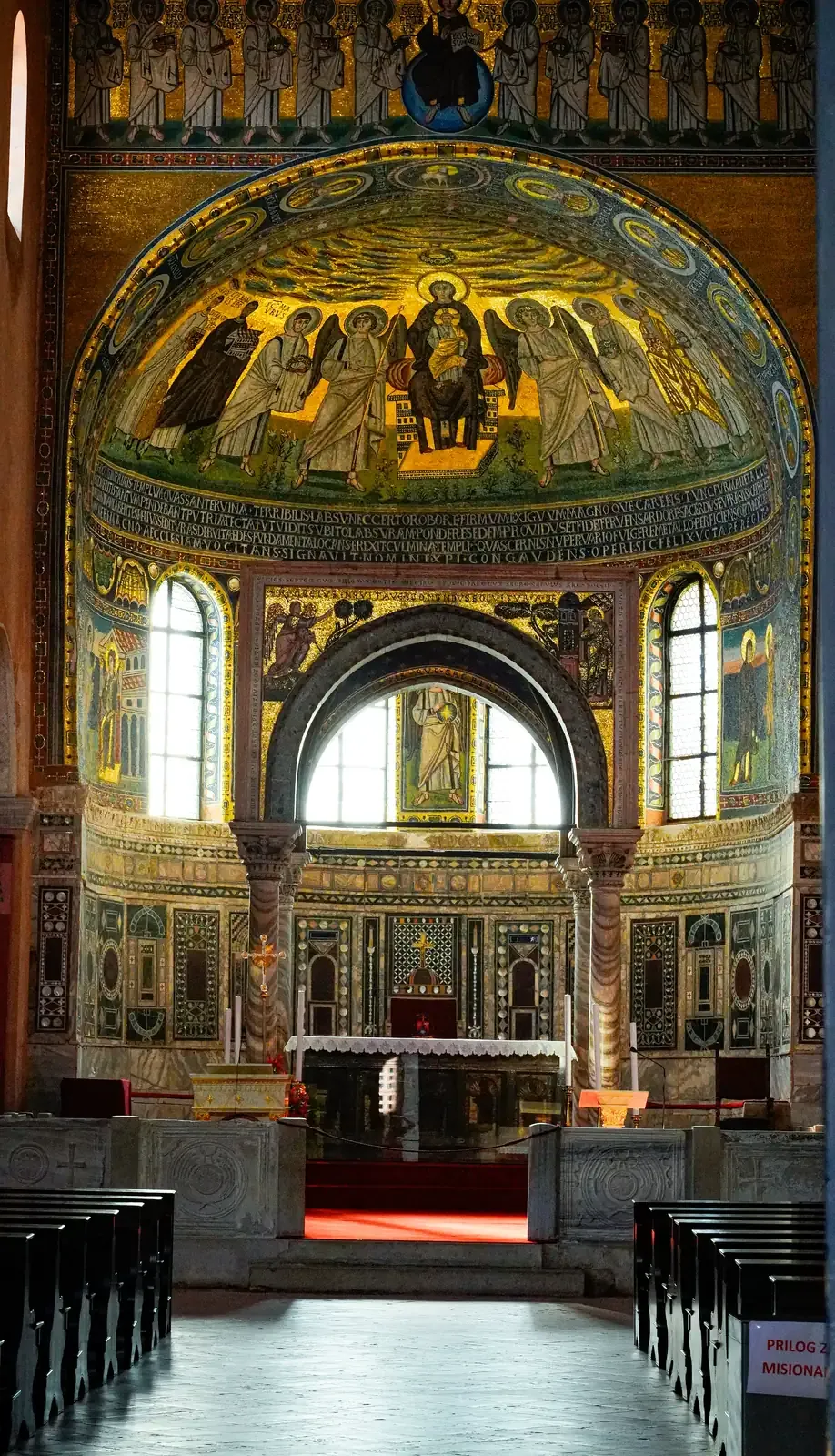
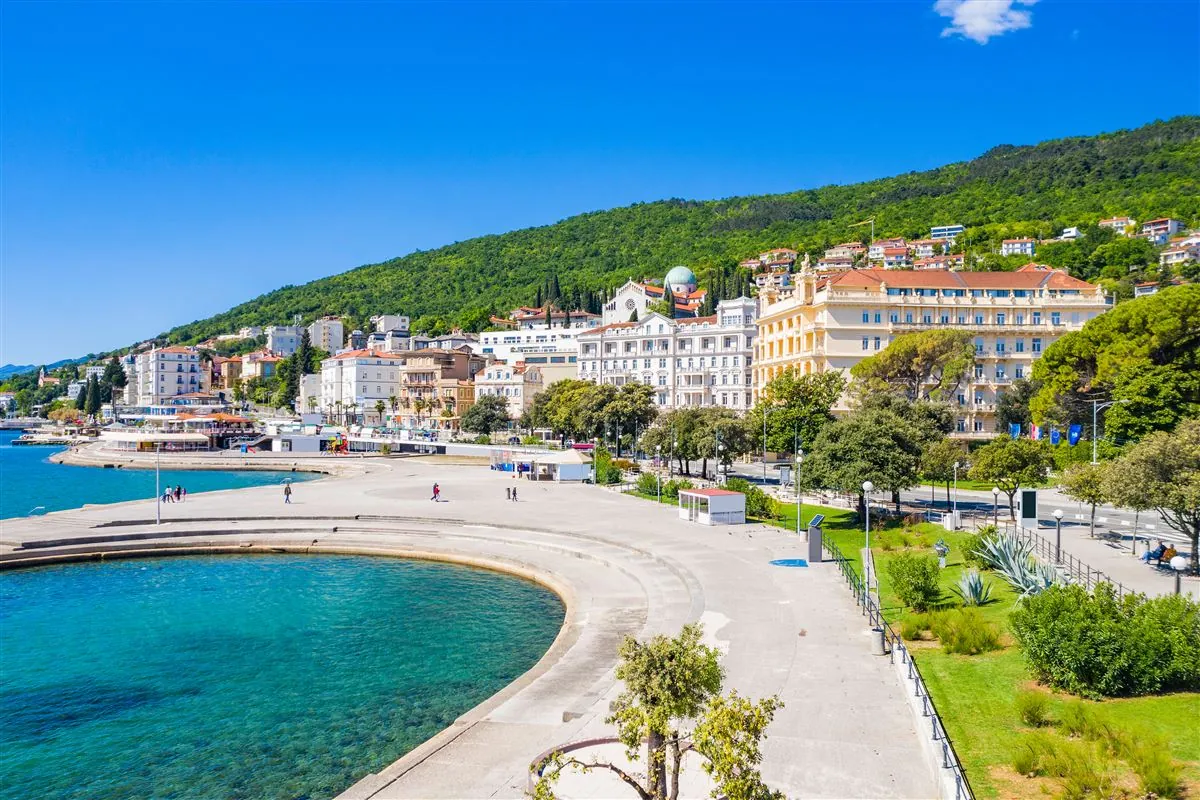
Outside the old town, Poreč is built around resort-style stays. Think long stretches of pebble and rock coastline, family hotels, and more organised beach infrastructure than Rovinj or Pula have. It’s also about 35km from Rovinj (around 40 minutes) and 114km from Rijeka Airport.
This is the base I’d pick over Rovinj if travelling with kids. It’s also the pick if beach time matters more than old-town wandering. The basilica takes under an hour to see properly, so the rest of a Poreč stay is swimming, not sightseeing. It also sits closer to the hill towns than Rovinj does.
Istria’s hill towns: Motovun, Grožnjan and Buzet
Inland Istria is a different region entirely: hilltop stone towns above vineyards and truffle forests, but not a coastline in sight.
Motovun is the best known, a walled town crowning a hill above the Mirna valley. It’s about 70km (55 to 60 minutes) from Pula, but only 29km (36 minutes) from Poreč. Walk the ramparts for the view over the valley below, where much of Istria’s truffle hunting happens.
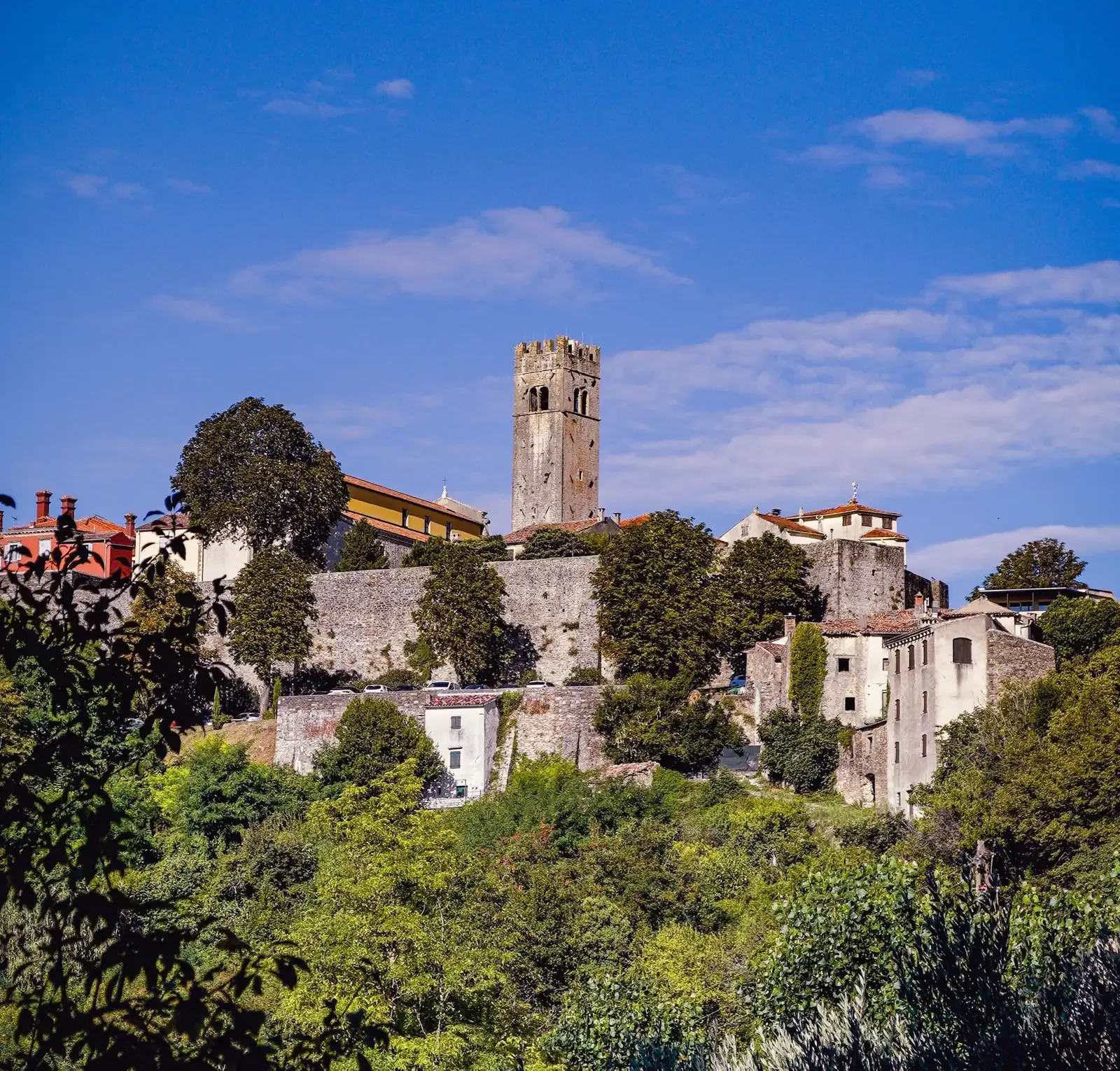
Grožnjan is smaller and quieter, known for artists’ studios and galleries rather than crowds. It pairs well with Motovun on the same inland day, since the two sit a short drive apart.
Buzet brands itself as Istria’s truffle capital and makes a reasonable third stop on a full inland food day. It’s less set up for casual wandering than Motovun or Grožnjan, though.
None of the hill towns work as a standalone base unless you have a car. You’ll also need to not mind driving to the coast to swim. Treat them as a single inland day, or two if you’re stopping to eat properly, from Rovinj, Poreč or Pula.
Pula vs Rovinj vs Poreč vs the hill towns
Here’s how the four areas compare when you’re deciding where to spend your nights.
| Area | Vibe | Best for | Distance from Pula |
|---|---|---|---|
| Pula | Working city, Roman ruins, airport town | Arrivals/departures, Roman history | Reference point (0 km) |
| Rovinj | Postcard old town, upscale, romantic | Couples, first-time visitors, photography | ~35 km (40 min) |
| Poreč | Resort coast, UNESCO basilica, family-friendly | Families, beach-first trips | ~60 km (43 min) |
| Hill towns (Motovun, Grožnjan, Buzet) | Inland stone villages, vineyards, truffle forests | Day trips, food and wine, quiet walking | ~70 km (55-60 min) to Motovun |
Istria’s food and wine: truffles, olive oil and Malvazija
Istria’s food identity is distinct from the rest of coastal Croatia. While Dalmatia runs on grilled fish and peka, Istria runs on truffles, olive oil, and a native white wine called Malvazija.
The truffle side is real, not just marketing. Autumn is white truffle season, the more expensive and aromatic of the two main types. Black truffles, however, show up across more of the year. I wrote a full truffle hunting in Istria guide covering the Motovun Forest area. It also explains what a hunt actually involves, and roughly what it costs.
If you want to book directly, this guided truffle hunting walk from Livade is a good option. Also, it sits right in the forest area where most hunts happen.
The olive oil claim isn’t marketing either. In fact, the Flos Olei guide named Istria the world’s best olive oil region for the ninth year running. That’s in its 2026 edition, which lists 68 Istrian producers on the guide’s global top-500. Pair a truffle lunch with a glass of Malvazija, the region’s signature white, or Teran, a heavier red. Then you’ve had the two defining drinks of the region in one sitting.
How many days do you need in Istria, and where should you base yourself?
Five days covers Pula, Rovinj, Poreč and one inland day comfortably. Seven, meanwhile, lets you add Brijuni National Park and a slower pace without driving every day. Still, I wouldn’t try to do Istria properly in under four.
For a single base, Rovinj wins for most first-time visitors. That’s because it’s central, walkable, and within 40 minutes of Pula and the hill towns. But if you’re prioritising beach time over old-town wandering, switch that base to Poreč. Pula works too, especially if you’re flying in and out and don’t want to move hotels. You’ll trade some of the charm of Rovinj or Poreč for convenience, though.
Book accommodation early for July and August. Search Rovinj hotels and apartments on Booking.com and you’ll see prices climb for anything in the old town by June. That’s because the good places go months ahead.
If you want the day-by-day version of this instead of the overview, read the 7-day Istria itinerary next. It also covers Rovinj, Pula, Brijuni, Poreč and the hill towns as an actual route with a night-by-night plan.
For a full town-by-town archive, including smaller stops this guide didn’t have room for, browse the Istria destination hub. Then start with whichever town matches how you want to spend your days. Rovinj is for photogenic wandering, Poreč is for beach time, and Pula is for Roman history. The hill towns are for the day when you don’t want to see the sea at all.