Krk is the only Croatian island you can drive onto without checking a ferry timetable first.
A 1,430-metre bridge has connected it to the mainland near Rijeka since 1980. The toll was scrapped on 15 June 2020, so crossing it now costs nothing. That single fact changes how you plan a Krk trip, unlike almost every other island on this site. In fact, there’s no port queue, no missed sailing, and no car ferry slot to book weeks ahead.
I’m covering the island’s four main bases: Krk Town, Baška, Vrbnik and Punat, plus the monastery islet of Košljun. If you only came here for one thing, it’s probably Baška’s beach or the bridge itself. Either way, I’ll get to both.
Quick answer: what makes Krk different from other Croatia islands
Krk and Cres are essentially tied for Croatia’s largest island by area. Both measure around 405.8 km², although that depends on which survey you trust. Still, Krk is the more visited and more developed of the two.
You reach Krk by car over the bridge from the A7 near Rijeka, because there’s no ferry. Rijeka’s own airport also sits on the island, near the town of Omišalj, about 17 km from Rijeka’s train station.
Want the longest stretch of sand and pebble on the island? Then base yourself in Baška. If you want an old town with a harbor and a cathedral, stay in Krk Town. Quiet hilltop views and a wine you can’t get anywhere else, however, point to Vrbnik.
| Town | Known for | Best for |
|---|---|---|
| Krk Town | Romanesque cathedral, city walls, harbor promenade | First-time visitors, walkable old town |
| Baška | Vela Plaža beach, the Baška tablet’s home parish | Beach days, families |
| Vrbnik | Cliffside old town, Žlahtina white wine | Wine tasting, quiet evenings |
| Punat | Croatia’s largest marina, boats to Košljun | Sailors, day trips to the monastery islet |
Krk Town: the old town most people base themselves in
Krk Town sits on the island’s south-west coast, so it’s the obvious first stop. The old town is compact enough to walk in an hour, so look for the Romanesque cathedral and the remnants of the Frankopan castle walls. Meanwhile, the harbor promenade is lined with restaurants under red-tiled roofs.
I’d treat it as a base rather than a full day out. It’s central to the rest of the island, so day trips to the other towns are easy from here. For example, the drive to Baška takes about 26 minutes for 22 km.
Not renting a car for the whole trip? Then a guided day tour covers the island’s highlights while you skip the driving. This Golden Island of Krk tour from Rijeka runs about six hours, and it covers the island’s main towns with a guide. Want the longer version before you go? The Krk destination page has more on the town’s history.
Things to do in Baška: Vela Plaža and the island’s oldest text
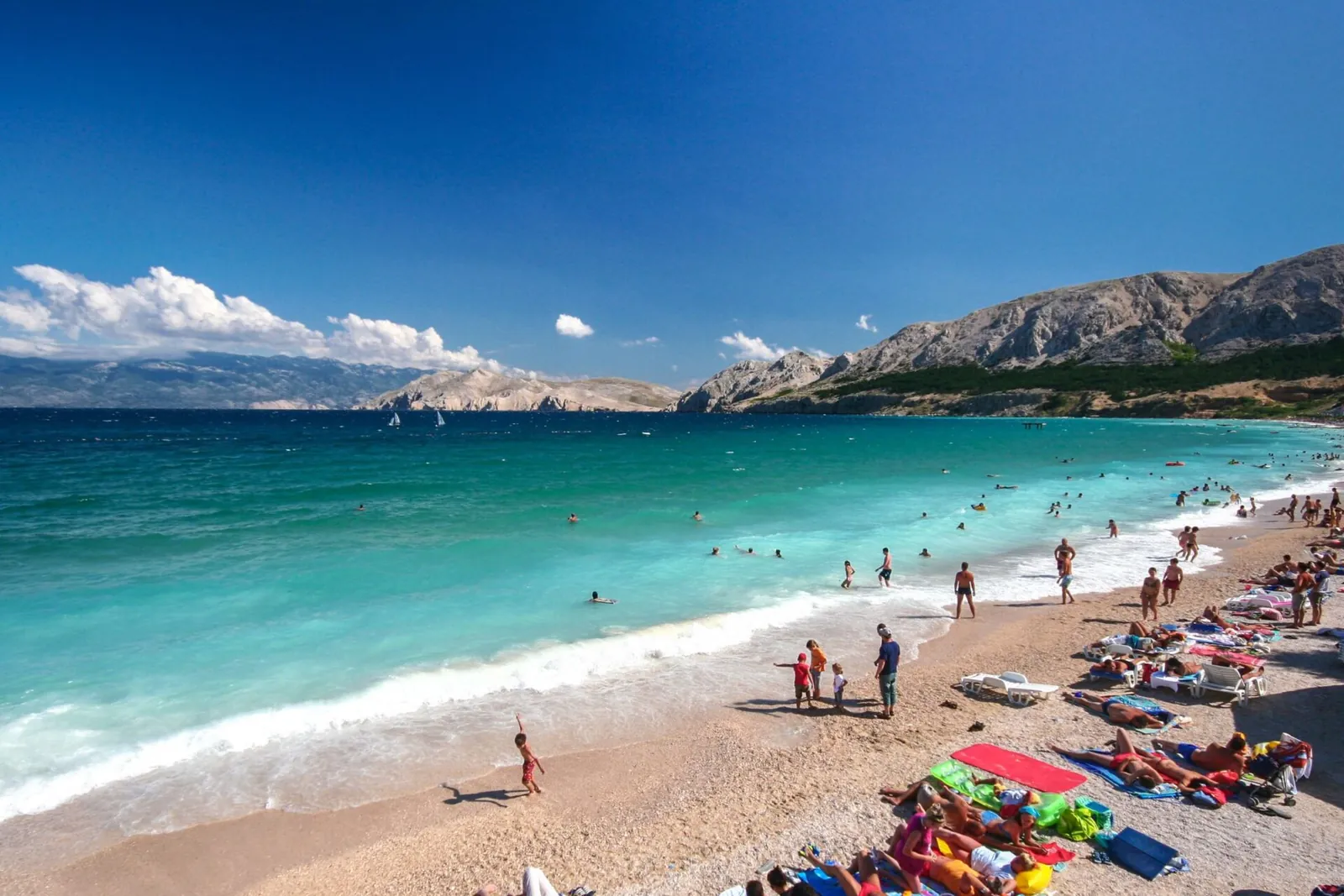
Baška sits on Krk’s south-east coast, roughly 22 km from Krk Town. Bare limestone mountains back the bay and face the Velebit range across the channel. Overall, it’s the one town on this island most people have actually heard of, usually for one reason: the beach.
Vela Plaža is a 2-kilometre pebble beach that curves along the whole length of the bay. A promenade of cafés and restaurants runs behind it. However, it gets busy in July and August. If you want space to spread a towel without stepping over someone else’s, go in June or September instead.
Still, Baška’s other claim matters more than most beach towns can offer. The Baščanska ploča is a stone tablet from around 1100 AD. It was found in the nearby church of St Lucy in Jurandvor. Since it’s one of the oldest surviving texts in Glagolitic script, it’s a big deal. That’s the alphabet the Croatian coast used centuries before Latin script took over. The original lives in Zagreb now, but a replica and the church itself are a short drive from Baška’s beach. It’s worth the detour if you’ve read the site’s guide to the Glagolitic alphabet. After all, you’ll want to see where it was actually dug up.
Beyond the beach and the tablet, boat trips run to smaller bays and nearby islands. They leave from Baška and the wider south coast. This half-day boat trip to five islands is a reasonable way to see more of the coastline without driving yourself.
Baška doesn’t have Krk Town’s old-town density, and it doesn’t have Vrbnik’s wine cellars either. Instead, what it has is the best swimming on the island. It also has a genuinely significant piece of Croatian history five minutes from the sand. For a wider view of Croatia’s best coastline, check the best beaches in Croatia guide. It puts Vela Plaža in context against the country’s other options.
Vrbnik: the hilltop wine town
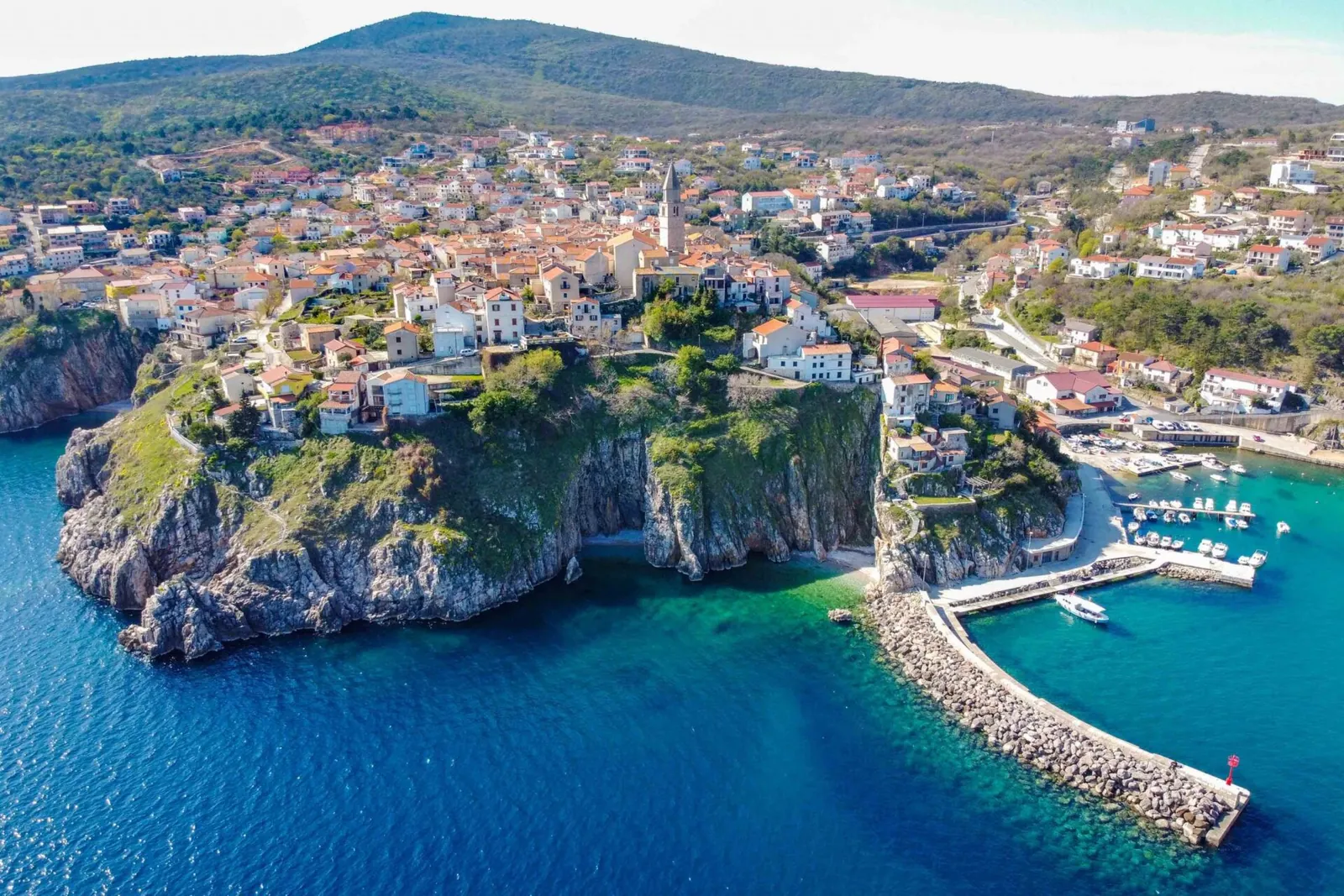
Vrbnik sits on a cliff on Krk’s north-east coast. It looks the part, with a compact old town perched above the water. A bell tower is visible from the approach road. Since it’s smaller and quieter than either Krk Town or Baška, that’s the appeal.
The reason to go is Žlahtina, a dry white wine made only from grapes grown in Vrbnik’s own fields. Its DNA doesn’t match any other grape variety recorded worldwide, according to ampelographic testing. That’s part of why it’s not sold much outside Croatia. It’s low in alcohol, around 11.5%, and meant to be drunk young rather than aged.
Local operators in Vrbnik run tastings, typically five to seven wines over about 90 minutes to two hours. Tastings are also often paired with local sheep’s cheese. Book ahead in July and August, because cellar space is limited and tastings fill up on weekends.
I wouldn’t base a full trip here. Instead, a half day covers the old town, the viewpoint over the sea, and a tasting. Combine it with Baška, since both sit on the island’s east side and the drive between them is short.
Punat and Košljun: a marina and a monastery islet
Punat sits on Krk’s south coast, a short drive from Krk Town, and holds the island’s largest marina. It’s less about the town itself and more about what leaves from its harbor: the boat to Košljun.
Košljun is a tiny wooded islet, just 6.5 hectares, sitting inside Punat’s bay. A Franciscan monastery has stood there since the 16th century, built over the foundations of an earlier Benedictine one. The boat crossing from Punat takes around eight to ten minutes each way. Once there, the monastery museum holds ethnographic, archaeological and sacred art collections. Entry runs about €6 for adults and €4 for children.
It’s a half-day outing at most: boat over, walk the island’s short paths through preserved forest and olive groves. Then visit the church and museum, and boat back. This Košljun boat tour with monastery visit departs from Punat and covers the crossing and the monastery entry together. That saves working out the timetable yourself.
Getting to Krk Island and getting around
The bridge is the headline fact, so it’s worth repeating. There’s no ferry, no port, and no seasonal capacity limit the way Hvar or Korčula have in August. Drive the A7 motorway from Rijeka, then cross the bridge, and you’re on the island in minutes.
Rijeka Airport is physically on Krk, near Omišalj on the island’s north-west tip. That’s not on the mainland, even though the name suggests it is. If you’re flying in, you’re already on the island before you’ve picked up a rental car.
A car makes the most sense here precisely because there’s no ferry logistics to work around. The guide to renting a car in Croatia covers the practical side: insurance, deposits, the usual pickup counter issues. It’s especially useful if you’re arranging one for the first time.
Weighing Krk against Croatia’s better-known islands before booking? The 7-day Croatia itinerary shows where a Kvarner stop like this one fits against Split, Hvar or Dubrovnik. Check it if you’re routing a longer trip.