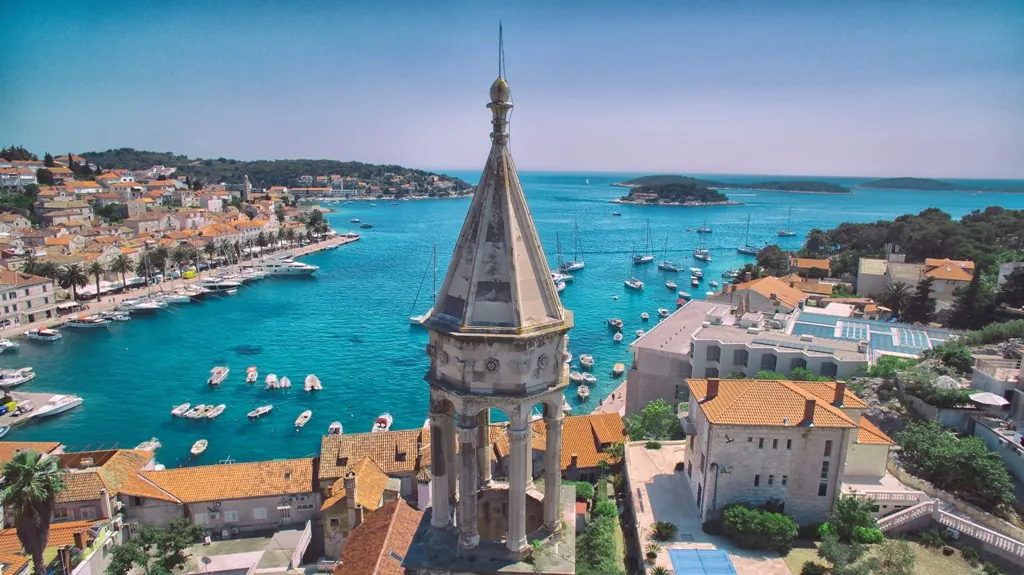
Pick Hvar if you want nightlife, boat parties and a polished summer scene, since it’s under an hour from Split. Pick Vis if you want fewer people and a beach regularly called Europe’s best. Vis was also a closed military zone until 1989. Overall, Hvar vs Vis comes down to how much company you want on your trip.
Both sit off Split in central Dalmatia, but they’re not really competing for the same traveller. Hvar Town has spent two decades building a reputation as one of the Adriatic’s loudest summer stops. Meanwhile, Vis spent the same decades barely open to outsiders at all, and it still feels that way in places.
Below: what each island is actually like, and what it costs to get there and stay. Also below: whether you can realistically do both in one trip.
Quick verdict: Hvar or Vis in one line
– Hvar → couples and groups who want boat days, beach clubs and a lively harbour after dark. It’s also busier and pricier in July and August.
– Vis → travellers who want quiet coves and a real local feel. They shouldn’t mind a longer ferry ride to get there, though.
– Both → doable in one trip when you have at least 5-6 days and don’t mind one ferry transfer between them.
What is Hvar actually like, and who does it suit?
Hvar Town is the glamour stop of the Dalmatian islands. The Riva fills with yachts from June through September, while the bars behind it don’t wind down until well after midnight.
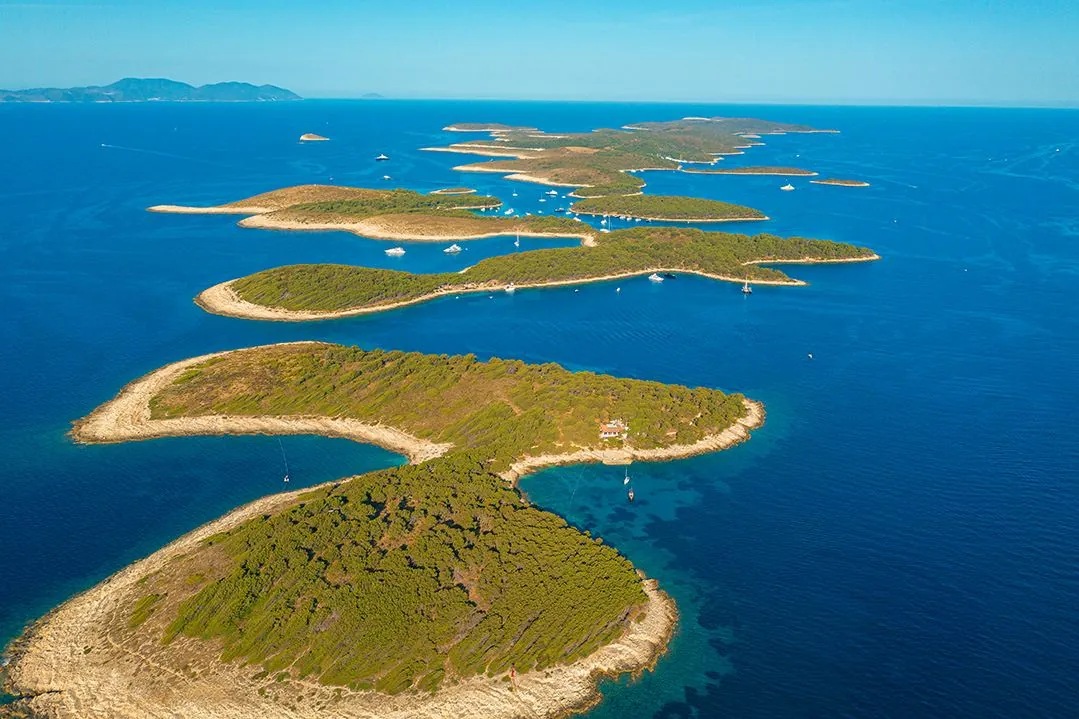
Carpe Diem in town switches from sunset cocktails to a club night when the sun’s gone. Still, the real scene is Carpe Diem Beach on Stipanska, one of the Pakleni Islands a short water taxi ride offshore.
Boat parties run there through peak season. A water taxi across costs roughly €10-15 return, while cocktails on the islands run €18-25, on the high end for Croatia.
Hvar isn’t only nightlife, though. Lavender is also a real local crop around the inland village of Velo Grablje. Mid-June is when the fields are worth the detour.
Away from the beach clubs, the Pakleni Islands themselves are still quiet, pine-fringed coves. Nightlife versus beaches is the bigger question when you’re choosing between them. I’ve written more about that side of Hvar in the Hvar vs Brač vs Korčula comparison.
Honest negatives: Hvar Town is the most expensive base of the two islands. It’s also the loudest at night in July and August. When you book accommodation in the old town for peak season, expect to hear the bars from your room.
Stari Grad, a 20-minute drive across the island, is a calmer alternative. Consider it if you still want to be based on Hvar. Compare hotels on Hvar on Booking.com by area before booking.
Hvar suits: couples wanting lively-but-romantic and friend groups planning boat days. It’s also right for anyone whose trip is built around going out at night.
What is Vis actually like, and who does it suit?
What Vis Looks Like Today
Vis is the furthest inhabited Dalmatian island from the mainland. For most of the 20th century, that distance had a purpose. Then, after 1945, the Yugoslav army turned Vis into a fortified military base. It had more than 30 installations, such as an underground hospital and a submarine shelter. It stayed closed to foreign visitors until 1989, and the last troops didn’t leave until 1992.
Vis feels different from the other Dalmatian islands today because of that closure. There was no decades-long run of hotel building or beach-club investment, unlike on Hvar. Vis Town and Komiža, the two main settlements, still read as working fishing towns first and tourist bases second.
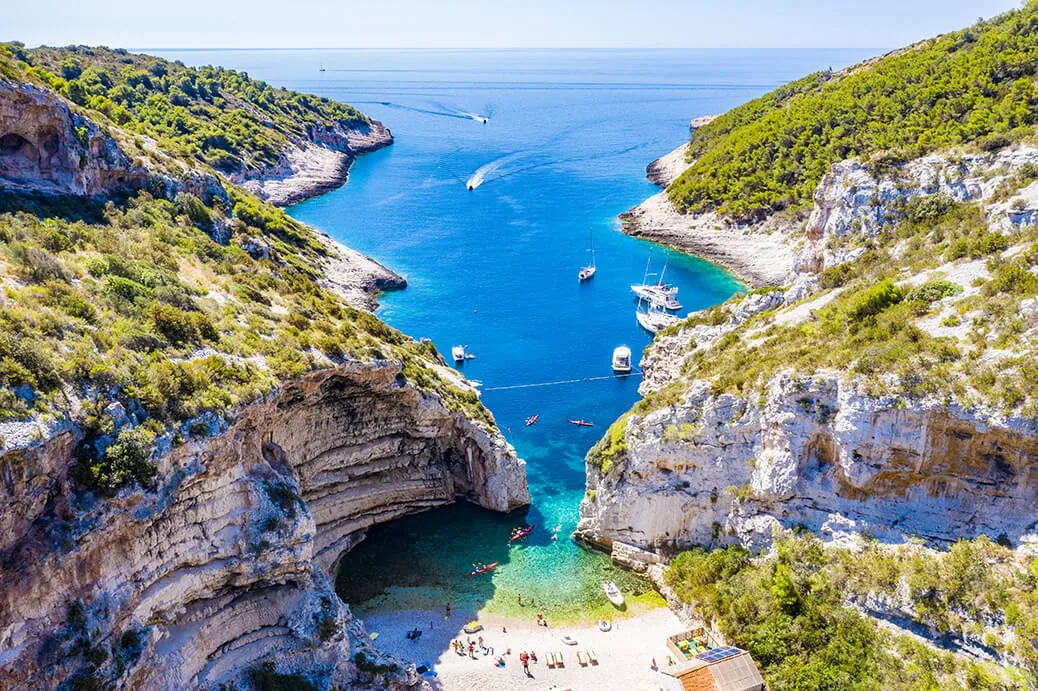
The island’s headline attraction is Stiniva, a cove on the southern coast. It was voted Europe’s best beach in a 2016 European Best Destinations poll. When you get there, a four-metre gap in a limestone cliff wall opens into a fifty-metre crescent of pebble beach. You can walk in via a steep path, but most visitors arrive by boat.
The Blue Cave, on the tiny neighbouring island of Biševo, is the other big draw. Sunlight refracts through an underwater opening, so the whole cave turns luminous blue for a short window around midday. Entry costs €24 in high season (20 June-10 September), but €18 in the shoulder months. That’s also on top of whatever boat tour gets you there.
Accommodation runs noticeably cheaper than Hvar. Expect roughly €80-150 a night for a standard room or apartment in Vis Town in peak season. Komiža runs slightly less, since it’s quieter and more budget-friendly of the two.
Who Vis Suits
Honest negatives: Vis takes longer to reach and has fewer restaurants and services than Hvar, especially outside July and August. When you want restaurant choice, late-night bars, or a big selection of day-trip operators waiting on the dock, Hvar wins. It has more of all of it. Vis rewards patience rather than convenience.
Vis suits: travellers who’ve already done a busier Croatian island and want the quieter version. It also suits snorkellers and swimmers who care more about water clarity than nightlife. Finally, it suits anyone who wants to see a part of Croatia that was genuinely closed off within living memory.
A local boat is the best way to see what makes Vis worth the extra travel time. This Vis boat tour covering 3 islands, 2 caves and 7 spots runs from Vis itself. It takes in Stiniva and the Blue and Green Caves, as well as the Mamma Mia filming beach, in one half-day trip. When Vis’s film-location side interests you, I’ve covered the actual Mamma Mia! Here We Go Again locations on Vis separately.
Hvar vs Vis: the comparison table
| Hvar | Vis | |
|---|---|---|
| Vibe | Glamour, nightlife, lavender fields | Quiet, undeveloped, real local feel |
| Best for | Couples, groups, boat parties | Peace, snorkelling, repeat visitors |
| Getting there from Split | Catamaran ~50-65 min, about €23-25 | Catamaran or ferry 1.5-3 hrs 10 min, price varies by line and season |
| Daily sailings (peak summer) | Up to 19 | 1 daily off-season, up to 3 in summer |
| Accommodation (peak season) | Higher, especially Hvar Town centre | Roughly €80-150/night in Vis Town, less in Komiža |
| Signature spot | Pakleni Islands / Carpe Diem Beach | Stiniva Beach / Blue Cave (Biševo) |
| Cars on the ferry | Yes, Jadrolinija’s car ferry to Stari Grad (about 2 hrs). Catamarans to Hvar Town take foot passengers only | Yes, Jadrolinija’s car ferry to Vis Town (about 2 hrs 20 min, reservation needed). The Krilo catamaran takes foot passengers only |
Which is easier and cheaper to reach from Split?
Hvar, clearly. Catamarans from Split to Hvar Town take 50-65 minutes. They also run up to 19 times a day in peak summer across Jadrolinija, Krilo and TP Line. A one-way adult ticket runs roughly €23-25 on the direct crossing. Fares start from about €15, though, on routes that also call at Milna on Brač.
Vis takes longer no matter which operator you pick. Jadrolinija’s ferry takes around 2 hours 20 minutes, while Krilo’s catamaran is faster at roughly 1 hour 30 minutes. It doesn’t run nearly as often as the Hvar lines, though. Expect 1 daily sailing off-season, but up to 3 a day in summer. If you’re bringing a car, you need the Jadrolinija ferry, and it’s a reservation line, so book ahead in summer. The catamaran takes foot passengers only.
Cost and convenience matter more than quiet for a lot of travellers, so that gap alone pushes many first-timers toward Hvar.
Which island for nightlife, peace, first-timers or repeat visitors?
– Nightlife: Hvar, easily. Vis has bars rather than clubs.
– Peace and quiet: Vis, by a wide margin. Hvar’s calmer bays still get busier than most of Vis in peak season.
– First-time visitor to Croatia with limited days: Hvar. The ferry frequency and shorter crossing also make it easier to fit into a tight itinerary.
– Someone who’s already done Hvar, Brač or Korčula: Vis. It’s the natural next island when you want less crowd and more distance from the standard route.
– Water clarity and snorkelling: Vis. The Blue Cave and Stiniva’s enclosed cove are both built around exceptional visibility.
– Budget: Vis. Accommodation and food both run cheaper than Hvar Town, especially outside the cave/tour costs.
Can you day-trip between Hvar and Vis?
Yes, in both directions, but it’s a full day either way and worth planning around, not improvising.
From Hvar, several speedboat operators run day tours out to Vis and the Blue Cave. Hvar Town also sits closer to Biševo than Split does. This speedboat tour from Hvar covers the Blue Cave, Vis and the Pakleni Islands in one trip. It’s the easiest way to see Vis’s highlights when you’re only staying on Hvar.
From Split, a handful of combined speedboat tours hit both islands in one long day. This full-day speedboat trip from Split covers the Blue Cave, Vis and Hvar together. It runs roughly 10 hours door to door. It’s a long day, so you’ll spend more of it moving than swimming compared to a single-island trip. Still, it’s the realistic way to see both without an overnight stay on either.
Neither island works as a genuine day trip from the other by public ferry. That’s because there’s no direct scheduled line between Hvar Town and Vis Town. You’re relying on a private tour boat instead of a public timetable.
A specific recommendation
For a first Dalmatian island trip with limited time, base yourself on Hvar for 2-3 nights. Then book one of the Hvar-based speedboat tours out to Vis and the Blue Cave. That’s easier than trying to add an overnight stay, especially when you don’t have room for one. You get the easier ferry, the nightlife, and still see Vis’s best-known spots in a single day.
When your trip runs 6 days or more and quiet matters more than convenience, split it properly. Spend a few nights on Hvar first. Then take the longer catamaran or ferry over to Vis for at least two nights. Two nights is the minimum because it lets you actually see Stiniva, Komiža and the Blue Cave without rushing between ferries. For the wider Dalmatian island picture beyond just these two, the Croatia island hopping guide is worth a look. It also covers how Hvar and Vis fit alongside Brač and Korčula on a longer route.
Weighing more islands than just these two for your whole Dalmatian trip? The Hvar vs Brač vs Korčula guide is the next comparison to read, so do it before you book ferries.