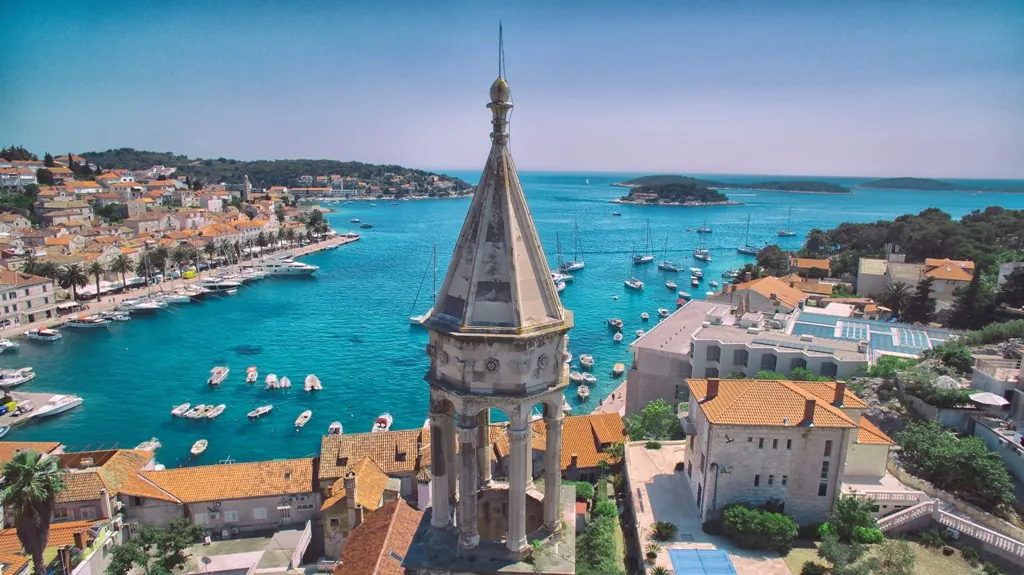
Vis was a closed Yugoslav military zone until 1989, so foreign visitors weren’t allowed on the island at all. The last troops didn’t leave until 1992.
That’s still the reason Vis doesn’t feel like Hvar or Split, because no big resorts got built here while the rest of the Dalmatian coast was developing.
What’s left is stone villages and a wine grape you won’t find anywhere else. There’s also a beach that ended up in a Hollywood film almost by accident.
Quick answer: how many days do you need on Vis Island?
Give it 3 to 4 days minimum. Budget one day for a Blue Cave and Stiniva boat trip. Then give one day to walking Komiža and the old military tunnels. Add one day for wine and a slow lunch, plus a spare day if the ferry schedule doesn’t cooperate.
| What | Detail |
|---|---|
| Getting there | Jadrolinija car ferry or passenger catamaran from Split |
| Ferry time | Car ferry about 2 hours 20 minutes; catamaran 1 hour 10 minutes to 2 hours |
| Best base | Vis Town (ferry port, more restaurants) or Komiža (Blue Cave boats, quieter) |
| Minimum stay | 3-4 days |
| Known for | Blue Cave, Stiniva Beach, Vugava wine, WWII/Cold War military sites |
| Car-free | No, but a car isn’t essential if you’re based in one town |
I wouldn’t try Vis as a day trip from Split, because the ferry timing makes it tight. In fact, you’ll spend more time in transit than on the island.
How to get to Vis Island from Split
There’s no airport on Vis, so every route runs through Split. Jadrolinija operates a car ferry that takes about 2 hours 20 minutes. It carries roughly 5 to 6 sailings a day in high season, but drops to 3 to 5 a day off-season.
The passenger-only catamaran is faster, so it’s the better pick if you don’t need a car. A direct sailing runs about 1 hour 10 minutes.
However, services that stop at Hvar or Milna on the way can take closer to 2 hours. Check the current Jadrolinija timetable before you book, since frequency changes by season.
There’s also a Krilo catamaran connection between Vis and Hvar Town, about 40 minutes each way. That matters if you’re combining Vis with a Hvar stay rather than routing everything through Split.
The Hvar vs Brač vs Korčula comparison is worth reading if you’re still deciding which islands to base yourself on. It’ll also help you plan the rest of the trip.
| Option | Duration | Takes a car | Notes |
|---|---|---|---|
| Jadrolinija car ferry | ~2h20m | Yes | 5-6 daily in high season, fewer off-season |
| Direct catamaran | ~1h10m | No | Fastest option, foot passengers only |
| Catamaran via Hvar/Milna | up to ~2h | No | Slower but useful if you’re stopping en route |
| Krilo catamaran (Vis-Hvar) | ~40m | No | Connects Vis directly to Hvar Town |
Bring cash. Card machines exist in the main towns, but I wouldn’t count on one working at a smaller kiosk or on the ferry itself. Most travelers use Revolut for Croatia, since it skips the currency conversion fees you’d otherwise pay on a regular card.
Vis Town or Komiža: where to stay
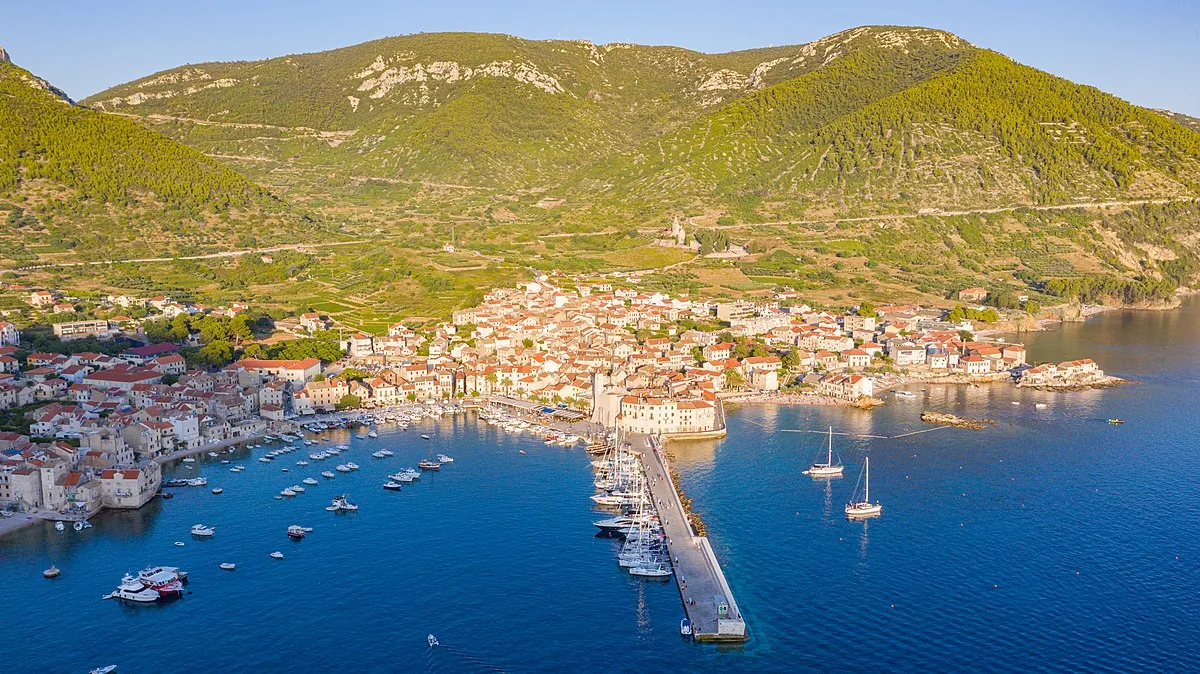
Two real towns share Vis, but they’re different enough that where you stay shapes the whole trip – Komiža and Vis Town. Vis Town sits around a wide bay, close to the ferry port. It also has most of the island’s restaurants and bars.
The Kut quarter is the old fishermen’s district on the eastern side of the harbour. In fact, it’s the most atmospheric part to base yourself.
Komiža sits on the opposite side of the island, facing the open sea. It’s smaller and more compact than Vis Town, though.
The town is built around a working fishing harbour, with stone houses right down to the waterline. It’s also the departure point for most Blue Cave boats, because Komiža is the closest mainland port to Biševo island.
| Vis Town | Komiža | |
|---|---|---|
| Character | Bigger, more restaurants and bars | Compact fishing town, quieter |
| Ferry port | Yes, main arrival point | No |
| Blue Cave boats | Some, but Komiža is closer | Yes, main departure point |
| Best for | First-timers, more dining options | Slower pace, boat trips to Biševo |
I’d pick Komiža if the Blue Cave is the priority and you come by car or don’t mind a short taxi or bus ride from the ferry. But I’d pick Vis Town if you want to walk everywhere without taking a bus, or renting a car. Both towns are very cute, although I personally prefer Komiža’s coziness over Vis Town.
Either way, book early for July and August, when rooms on Vis sell out weeks ahead. Check Vis Town and Komiža stays on Booking.com.
The Blue Cave, and how to actually see it
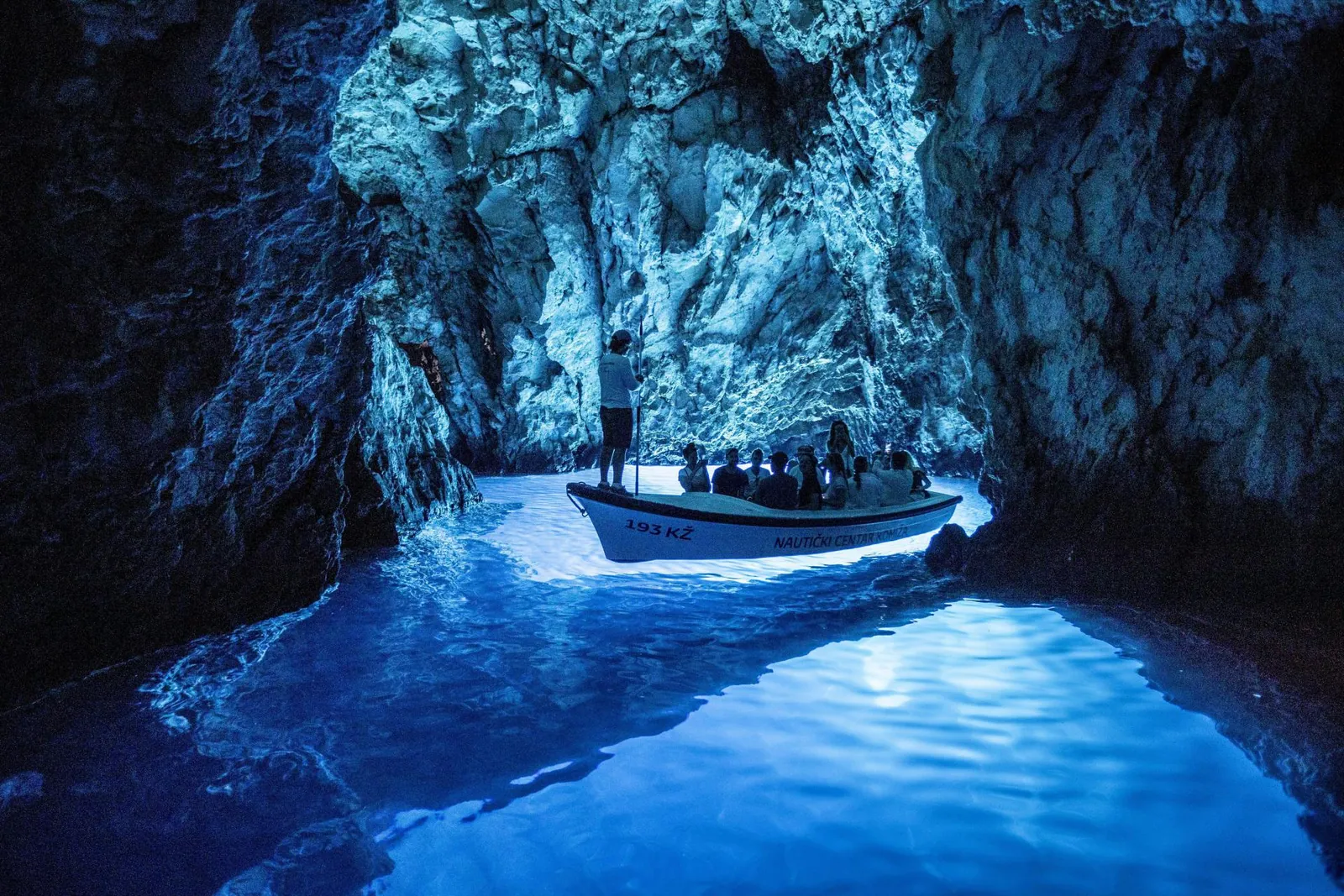
The Blue Cave (Modra špilja) isn’t on Vis itself. Instead, it’s on Biševo, a small island about 15 minutes by boat from Komiža. Timing matters because the light effect that makes the water glow only works within a specific window.
The cave is brightest between 11am and 1pm. That’s when sunlight comes through a submerged opening, bounces off the white seabed, and lights the chamber from below. Outside that window it’s still worth seeing, just dimmer.
You’re actually inside the cave for about 5 to 10 minutes, so most of the outing is the boat ride and the wait to enter.
Entry is a separate ticket from the boat, bought on-site at Biševo, cash only. In 2026 it runs about €24 per adult in high season (20 June to 10 September), but €18 in the shoulder months.
Children 6-12 pay roughly half price, while under-6s go free. It’s never included in the boat fare, so budget for both.
If you’re coming from Split, this tour covers the Blue Cave alongside Stiniva and the Mamma Mia locations in a single day. That’s the most efficient way to see all three unless you’re staying overnight on Vis.
If you’re already based on the island, a speedboat tour departing from Vis itself skips the Split crossing entirely. Instead, it takes you straight to Biševo and around the island’s other caves and coves.
Stiniva Beach and the Mamma Mia Vis Island connection
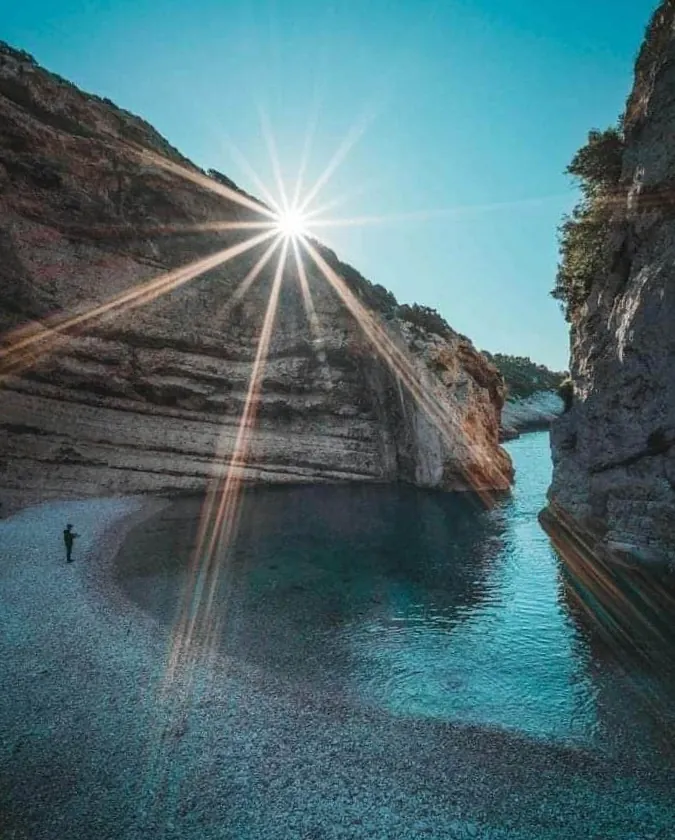
Stiniva is a narrow cove on Vis’s south coast, boxed in by cliffs on both sides. In fact, from a boat it barely looks like an entrance exists.
It was voted one of the best beaches in Europe in 2016. That’s one of the reasons Vis appears on more Croatia bucket lists than its ferry schedule would suggest.
It’s also where scenes from Mamma Mia! Here We Go Again were filmed, including the rowing-boat scene between Donna and young Sam. I’ve written a full breakdown of every Mamma Mia filming location on Vis. It covers how to reach each one, as well as what they actually look like now compared to the film.
There’s no road down to Stiniva, so most people arrive by boat. The walking path down from the clifftop car park is steep, though.
If you’re building out a wider beach list for the trip, Stiniva sits alongside the country’s better-known spots. Then see the best beaches in Croatia guide for the rest.
Vis’s closed military history: submarine tunnels and Tito’s Cave
During the Cold War, Vis was one of Yugoslavia’s most secretive military assets. In fact, it was home to more than 30 military installations, including a submarine base carved into a hillside near Vis Town.
The base runs about 110 metres into the rock and is open to visit today. It’s usually reached by boat, since there’s no easy road access.
The island stayed closed to foreign visitors until the summer of 1989. The last Yugoslav troops didn’t leave until 1992.
That closure is the direct reason Vis avoided the tourism development that reshaped Hvar and Brač in the same decades. It’s also why the island still has a genuinely different feel: fewer hotels, more family-run konobas, and a slower rhythm generally.
Tito’s Cave, a bunker complex carved into the hillside, is the most visited of the military sites. It can also be reached on foot or by car from Vis Town.
Several tour operators run dedicated military-history routes covering the tunnels, the submarine pens, and old artillery positions. These are worth booking, especially if this is the angle that interests you most.
Vugava wine and where to eat on Vis
Vugava is a white wine grape grown almost exclusively on Vis, not found in meaningful quantities anywhere else in Dalmatia. It’s dry, aromatic, and worth seeking out at a konoba rather than a supermarket bottle if you want the real version.
Komiža and the inland village of Plisko Polje both have working wineries open for tastings. Several restaurants also pair Vugava directly with the day’s fish catch.
If you want the pairing without organising it yourself, look for a Blue Cave day trip that adds an inland lunch and wine tasting at a restaurant known for its Vugava and other local varieties.
I’d eat at least one meal inland rather than on the harbour front. The waterfront restaurants in both towns are fine. However, the inland konobas tend to be where the fish and the wine are both genuinely local, rather than shipped in for the season.
Best things to do on Vis Island beyond the beach
Besides the Blue Cave and Stiniva, there’s enough on Vis to fill several more days:
– Walk the Kut quarter in Vis Town, the old stone fishermen’s district right on the harbour.
– Visit Tito’s Cave and the submarine tunnels near Vis Town for the Cold War history angle.
– Swim at Stončica or Srebrna beach instead if Stiniva is crowded or the boat timing doesn’t work.
– Taste Vugava at a Komiža or Plisko Polje winery rather than only at a restaurant.
– Take a full-island boat trip that combines the Blue Cave, Stiniva, and smaller coves in one outing, since several beaches on Vis are only reachable by water.
Most of these things to do on Vis work better with at least a partial car or scooter. That’s especially true for the inland wineries and Stončica, which sit some distance from both main towns. If you’re not bringing a car on the ferry, Discover Cars covers rental pickup in Split before you cross over.
Where this fits in a wider Croatia trip
Vis pairs naturally with Hvar, since there’s a direct 40-minute catamaran connection between the two. If you’re weighing Vis against the other central Dalmatian islands for a longer island-hopping route, the guide to island hopping in Croatia is worth a look. In particular, it covers how Vis compares to Hvar, Brač and Korčula for pacing a multi-island trip.
I’d give Vis a firm 3 nights minimum if it’s part of a longer itinerary. Anything shorter, I’d treat as a boat day trip from Split rather than a real visit to the island.
If Vis is one stop on a longer trip, the 7-day Croatia itinerary is a reasonable starting point. It’ll help you work out how many days to actually give it, especially against everywhere else on your list.